HiKOKI Tool Review: SDS Drill, Impact Driver & Drywall Gun
- Sam

- Mar 16
- 4 min read
A hands‑on review of the HiKOKI SDS Drill, Impact Driver, and Drywall Gun, tested on real jobs to see how they perform in the workshop and on site. This HiKOKI tool review breaks down build quality, performance, strengths, weaknesses, and value for money to help tradespeople and serious DIYers choose the right kit for their work.

First Impressions & Build Quality
The DH1826DA hits you straight away as an absolute powerhouse. It’s solid, weighty in a way that inspires confidence, and clearly built for people who take on serious, heavy‑duty work. The construction feels premium, with no loose parts or flimsy plastics — just a tough, job‑ready SDS drill.
Performance in Real‑World Use
This drill tears through masonry with ease. Blocks, bricks, stubborn old walls — it handles them all without hesitation. It’s fast, aggressive, and makes demolition or heavy drilling feel far less demanding than it should.
What This Tool Does Better Than Others
Its standout strength is raw, consistent power. Under load, it stays steady and doesn’t bog down, even when you push it hard. For heavy drilling and demolition tasks, it performs with a level of confidence many SDS drills struggle to match.
Where It Falls Short
The power that makes this drill so effective also limits its versatility. It’s not suited for delicate tasks, and the weight can become tiring during overhead work. Compared to my Titan SDS — which I use for heavier demolition — the HiKOKI is lighter and better for light‑duty demolition, but it’s still very much a specialist tool rather than an all‑rounder.
Who This Tool Is Best For
Tradespeople, renovators, and serious DIYers who regularly work with masonry or structural materials. If you’re drilling anchor holes or knocking through walls, this drill fits the bill. It’s more suited to people in the trade than casual DIYers.
Value for Money
Starting around £215 for the body‑only version, it offers strong value for the performance it delivers. Adding batteries increases the cost, but for heavy work, the investment is justified.
Final Verdict
A high‑performance SDS drill built for demanding jobs. It’s not subtle, but it gets the work done quickly and reliably. Ideal for anyone who needs serious power on site.

First Impressions & Build Quality
Compact, tidy, and lightweight, the WH18DC feels comfortable from the first grip. The build quality is solid without unnecessary bulk, and the ergonomics make it easy to handle during long sessions.
Performance in Real‑World Use
Driving screws feels smooth and controlled. It has enough power for everything from framing to cabinetry, and the battery life holds up well during continuous use. The grip stays comfortable, even after a long day.
What This Tool Does Better Than Others
Its biggest advantage is the balance of size and power. It’s strong without being heavy and compact enough to work in tight spaces where larger drivers struggle.
Where It Falls Short
It’s not the highest‑torque driver on the market. For oversized fixings or heavy structural screws, you may want something with more punch. For everyday carpentry, though, it’s more than capable.
Who This Tool Is Best For
Carpenters, DIYers, and apprentices who need a reliable, lightweight driver for daily use. It’s a great all‑rounder for anyone who spends a lot of time driving screws.
Value for Money
Starting around £90 for the body‑only version, it’s excellent value. Even with a kit, it remains affordable while offering performance that competes with pricier models.
Final Verdict
A dependable, well‑balanced impact driver that handles most tasks with ease. It’s the kind of tool that naturally becomes part of your everyday workflow.
First Impressions & Build Quality
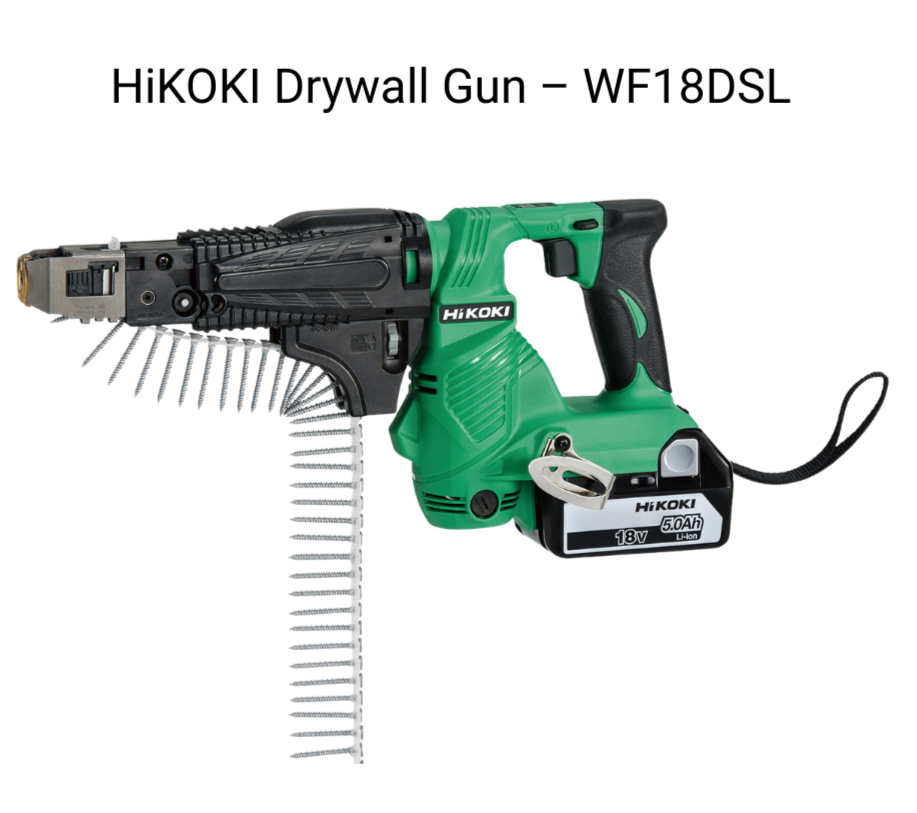
The WF18DSL looks purpose‑built: slim, lightweight, and designed for fast drywall installation. The build quality is decent, with a comfortable grip and simple controls. It’s clearly made for speed rather than brute force.
Performance in Real‑World Use
On straight runs, it performs well — quick, consistent, and efficient. But in corners or tight spaces, it struggles to maintain accuracy. You’ll often find yourself switching to a manual driver when precision matters.
What This Tool Does Better Than Others
For long, open drywall runs, it saves time and reduces fatigue. It keeps screw depth consistent and helps maintain a clean finish when the workspace is straightforward.
Where It Falls Short
Corners and awkward angles expose its limitations. It lacks the finesse needed for detailed work, and it doesn’t offer the versatility some users might expect from a drywall gun.
Who This Tool Is Best For
Drywallers and renovators working on large, open surfaces. It’s also useful for DIYers tackling full‑room drywall projects where speed is more important than precision.
Value for Money
Starting around £150 for the body‑only version, it’s good value if you’re doing a lot of drywall. As a general‑purpose tool, it’s harder to justify unless you regularly board entire rooms.
Final Verdict
A helpful drywall gun for straight, open runs, but not a precision tool. It’s a solid time‑saver, though it won’t replace your manual driver in tight spots.
The Wrap-Up
All three tools highlight how well HiKOKI builds kit with a clear purpose, and they slot neatly into my setup — most of my gear is HiKOKI at this point, so I’m a bit of a fan. The DH1826DA delivers huge power and stability, though its weight and lack of finesse can be a drawback. The WH18DC is a brilliant everyday driver with great balance and comfort, even if it’s not the highest‑torque option out there. The WF18DSL speeds through long drywall runs and saves loads of time, but it loses accuracy in corners and tight spots. Each tool has clear strengths and a few limitations, but together they show why HiKOKI has become my go‑to brand for reliable, purpose‑built kit.

Comments